



There's a moment in every well-designed room where your eye finds the thing it was always going to find. A fireplace wall, done right, is that thing.
Not because fire demands attention (though it does) but because a truly considered fireplace wall takes everything a room wants to be and brings it to life. The material, the scale, the negative space around the flame. It's the room's thesis statement, rendered in plaster and light.
Water vapor fireplaces have quietly become the tool that makes this kind of design attainable — not just in new builds with generous budgets and open floor plans, but in the renovations, the rentals, the rooms that exist in the real world. Here's what you need to know to design one that looks like it was always meant to be there.
Why the Fireplace Wall Works (and Why Most Miss the Mark)
The fireplace wall fails when it's treated as a single decision: pick a surround, hang a TV, call it done. It succeeds when it's treated as architecture: a composition of materials, proportion, and depth that rewards the eye at multiple distances.
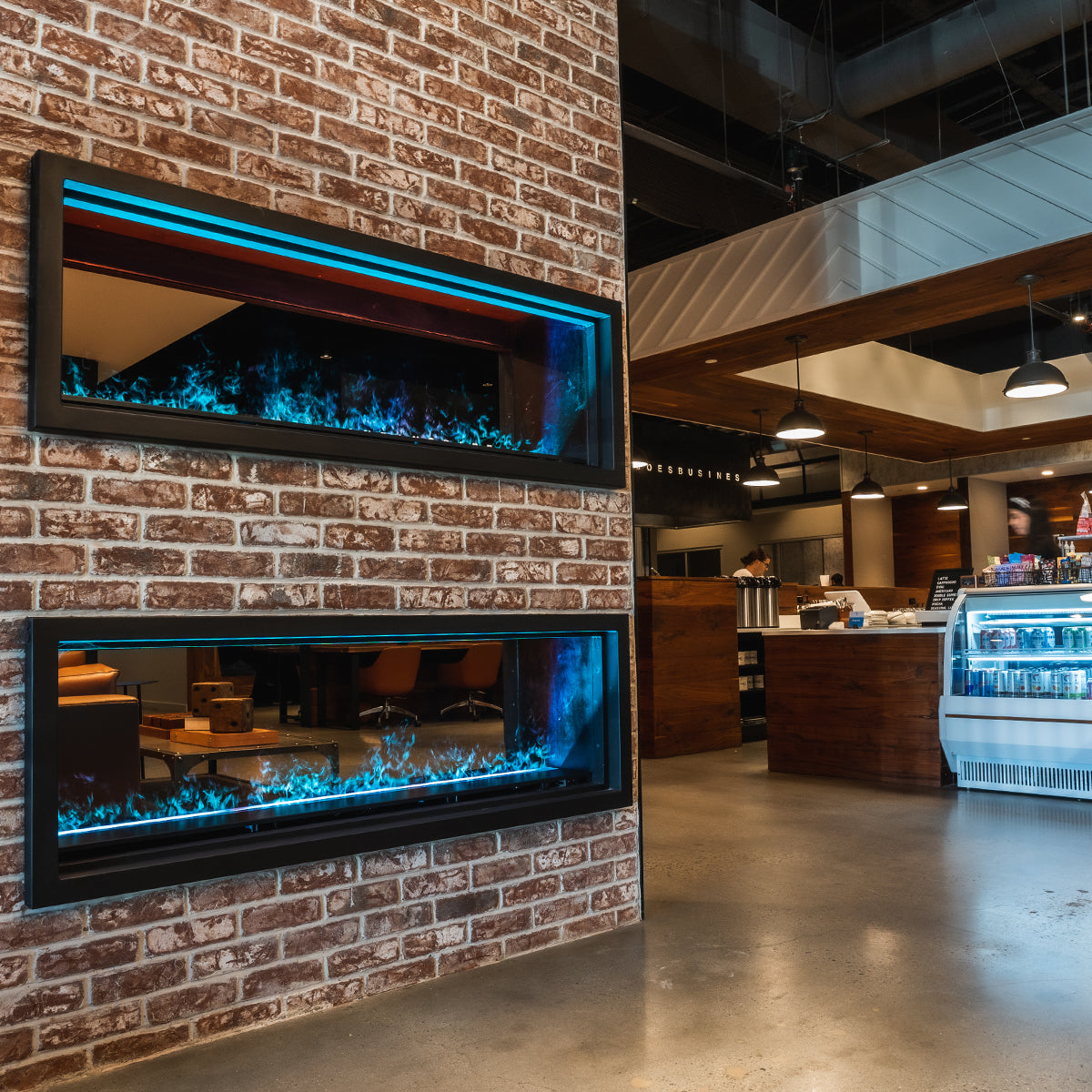
Water vapor fireplaces are uniquely suited to this kind of intentional design. Because they don't require a flue, gas line, or chimney, the wall is yours to shape entirely. The fireplace goes where you want it...not where the infrastructure allows. That freedom changes everything about how a space can be composed.

Choosing Your Wall Material
The material backdrop is the first decision — and the one that carries the most visual weight. A few directions that consistently translate well:
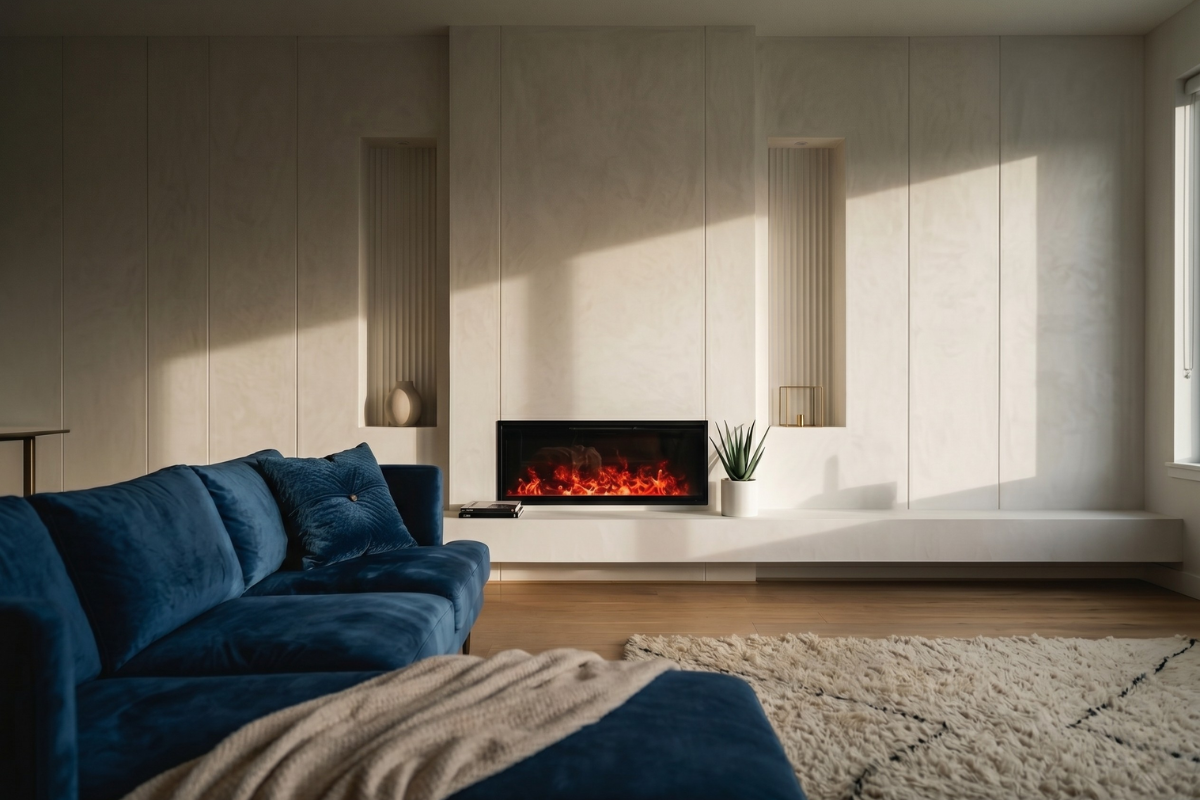
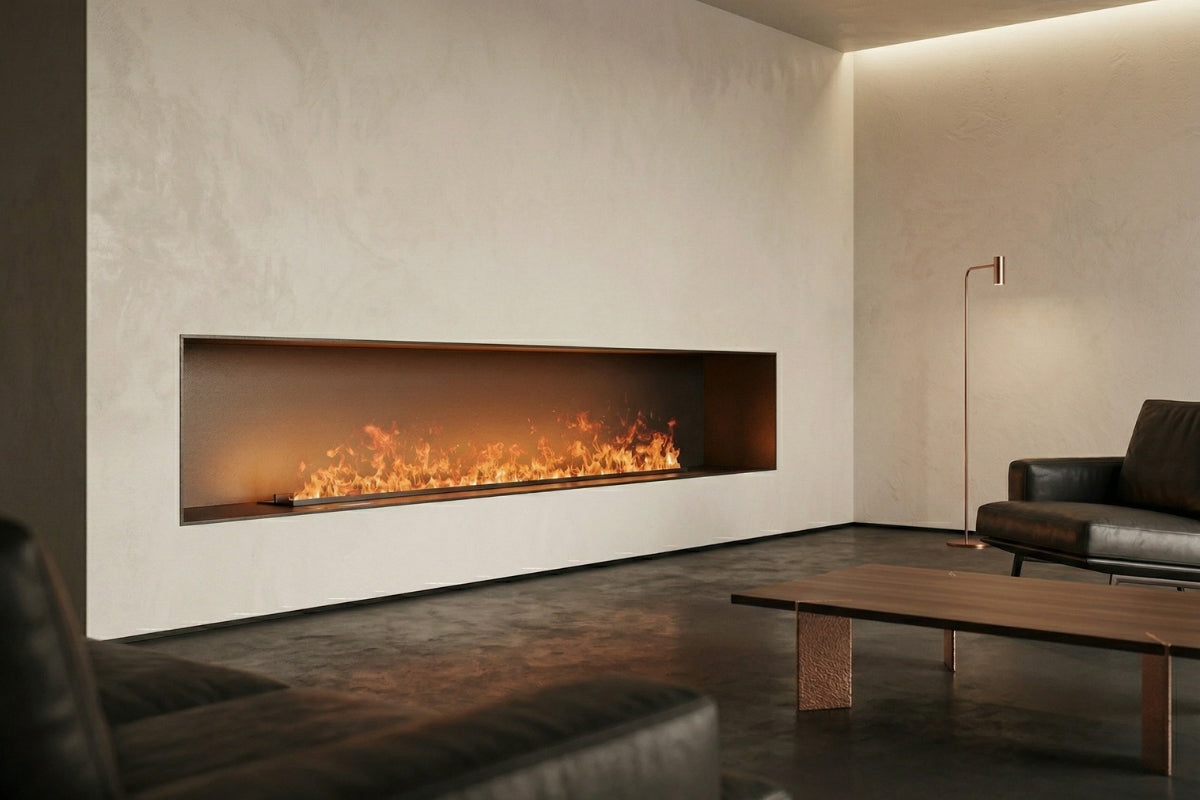
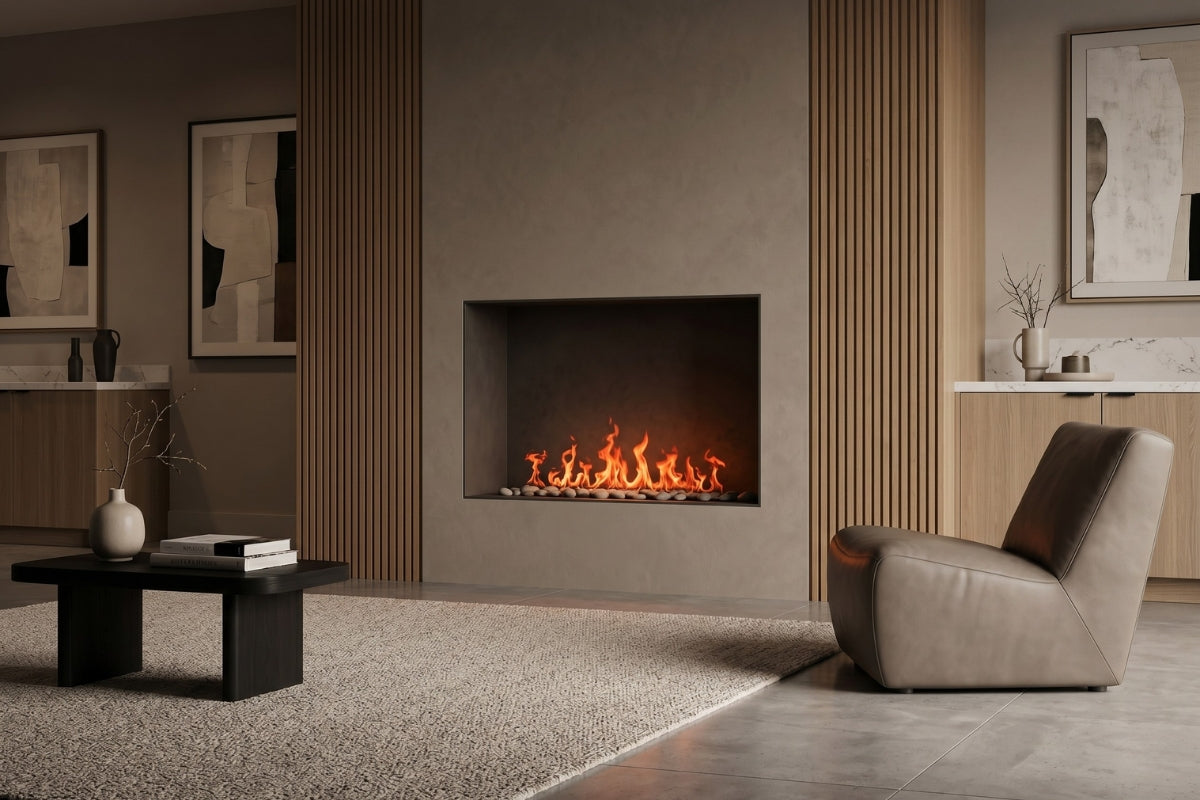
Limewash Plaster The organic texture of limewash catches the light from the flame in a way that painted drywall simply doesn't. It moves. It has depth. Applied in a warm white, bone, or pale clay tone, it positions the flame as a jewel in a rough setting. Portola Paints and similar specialty brands have made this finish more accessible than ever for contractors and skilled DIYers alike.
Fluted or Paneled Wood Warm-toned wood paneling (walnut, white oak, cerused oak) adds richness without weight, particularly when the fireplace is recessed flush into the surface. The visual rhythm of fluted panels draws the eye to the center without competing with the flame.
Plaster Niche Surrounds Architectural plaster built around the fireplace opening creates a sense of permanence and custom craftsmanship. Even in a room that's otherwise transitional or contemporary, a plaster surround reads as intentional.
Large-Format Stone or Tile Sintered stone slabs or large-format tile (24x24 or larger) in a book-match or stacked vertical pattern give the wall a gallery-like quality. The cooler material temperature contrasts beautifully with the warm visual of the flame.

Thinking About Scale and Proportion
The fireplace-to-wall ratio is where most installations either earn their drama or lose it. A few principles worth keeping:
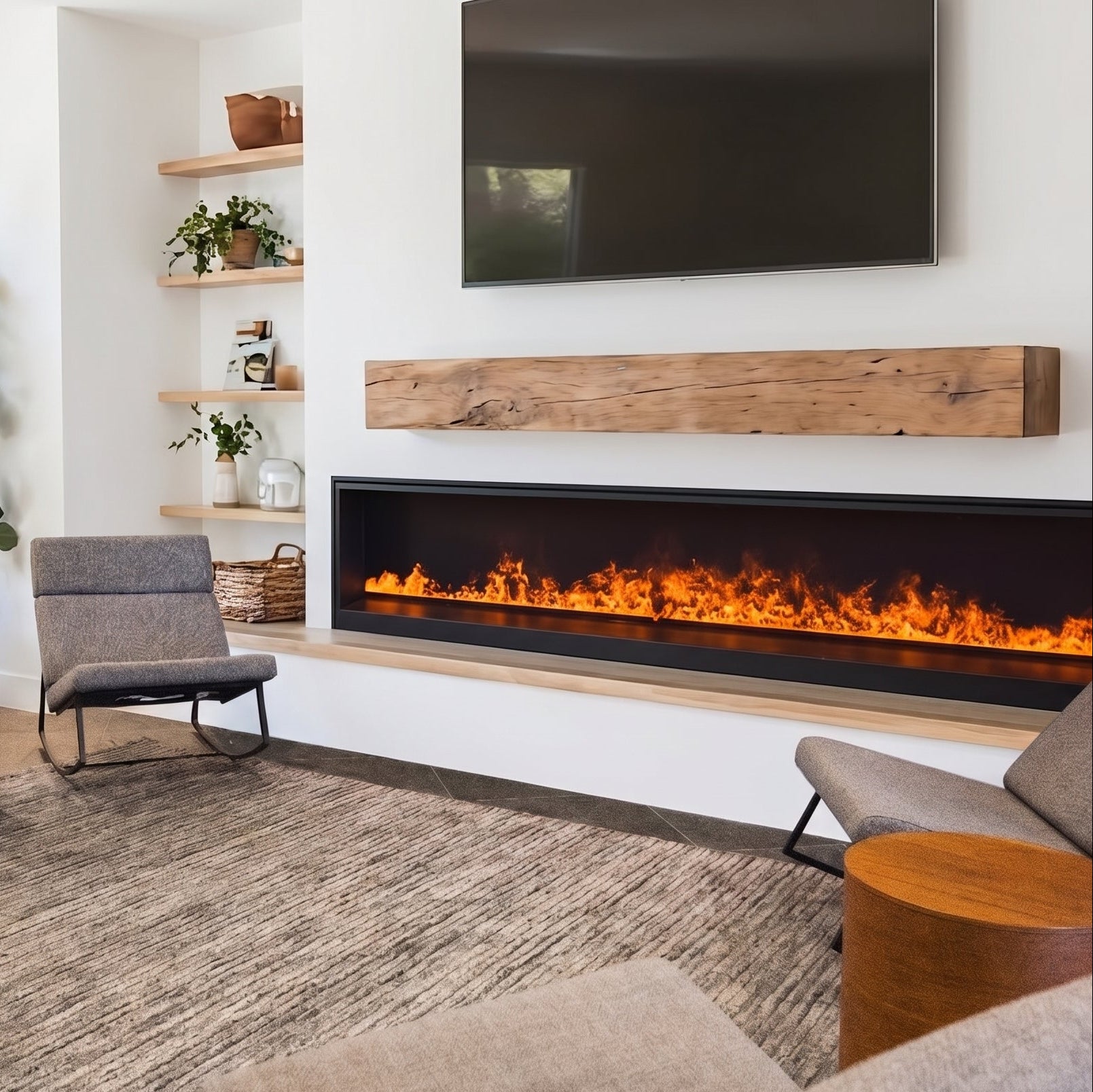
Go wider than you think. A fireplace that fills two-thirds of a wall's width creates a horizontal anchor that reads as intentional. A smaller unit surrounded by empty space can look afterthought, not focal point.
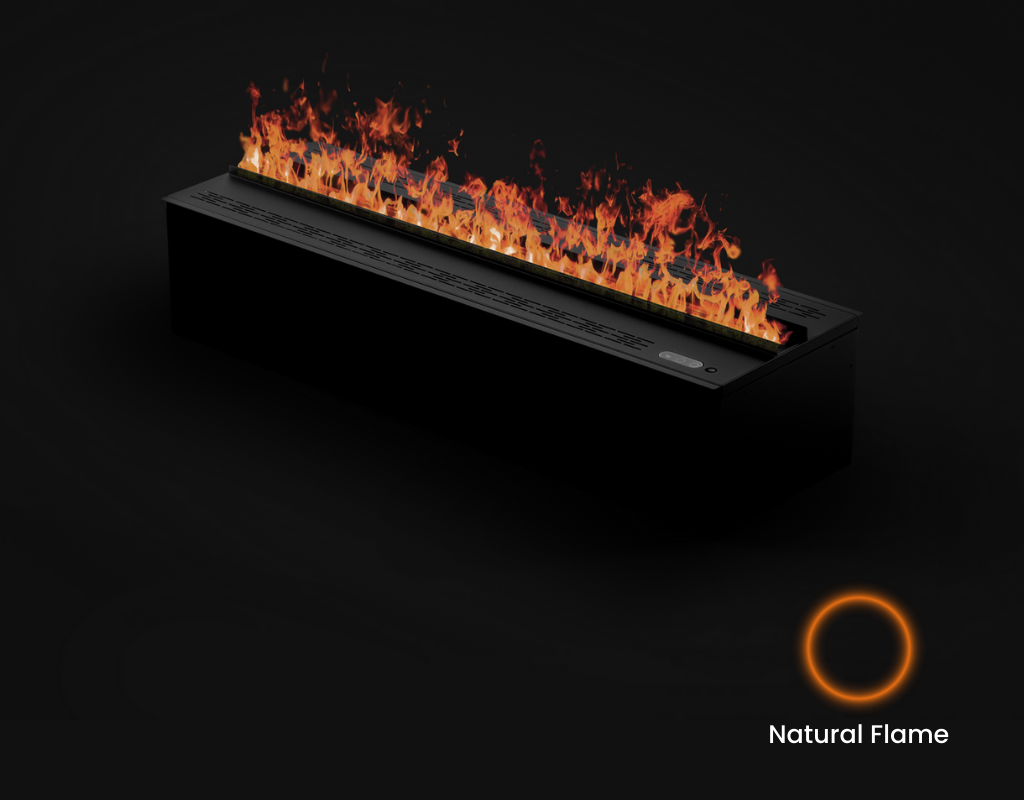
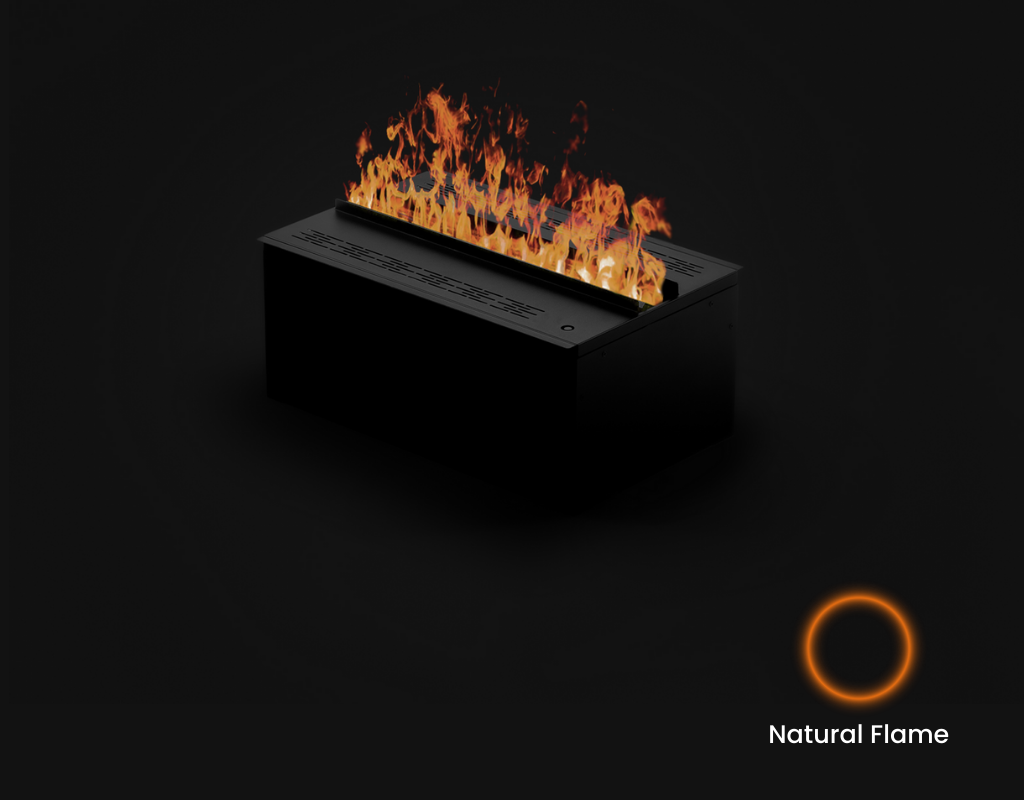
Consider the flame length. Aquafire's linear fireplaces range in size, and the unit you choose should be proportional to the wall it anchors. A 48" or 60" flame in a generous living room feels sweeping. The same flame in a smaller study becomes commanding.
Match the install height to the room's use. Console height (30–36" from floor) works beautifully in living rooms where seating faces the wall. For a room where you're standing more (a bar, a dining room, a bedroom) consider raising the fireplace to eye level, set into a niche or within a full-height surround.
Resist the urge to flank with a TV. This is a design choice, not a technical limitation. A statement fireplace wall functions differently when the television shares its real estate. If both need to live in the same room, consider a perpendicular wall for the screen, or a ceiling-mounted lift that disappears when not in use.
The Specs That Make It All Possible
This is where water vapor fireplaces distinguish themselves from every traditional option — and from most electric alternatives too.
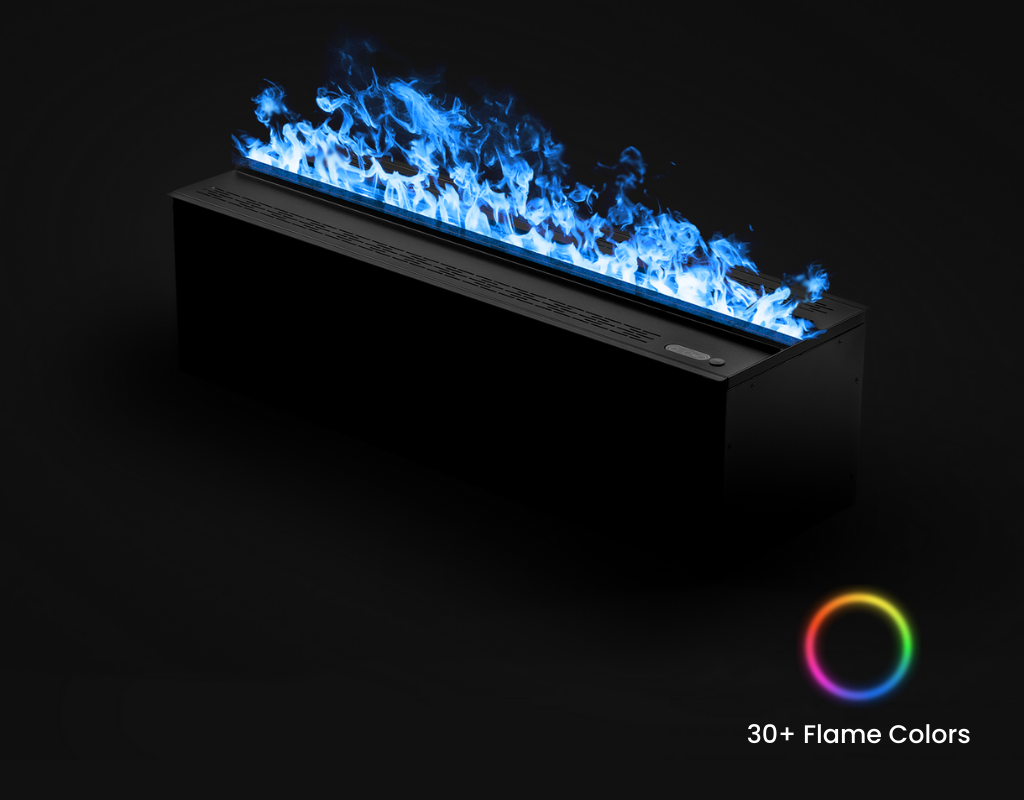
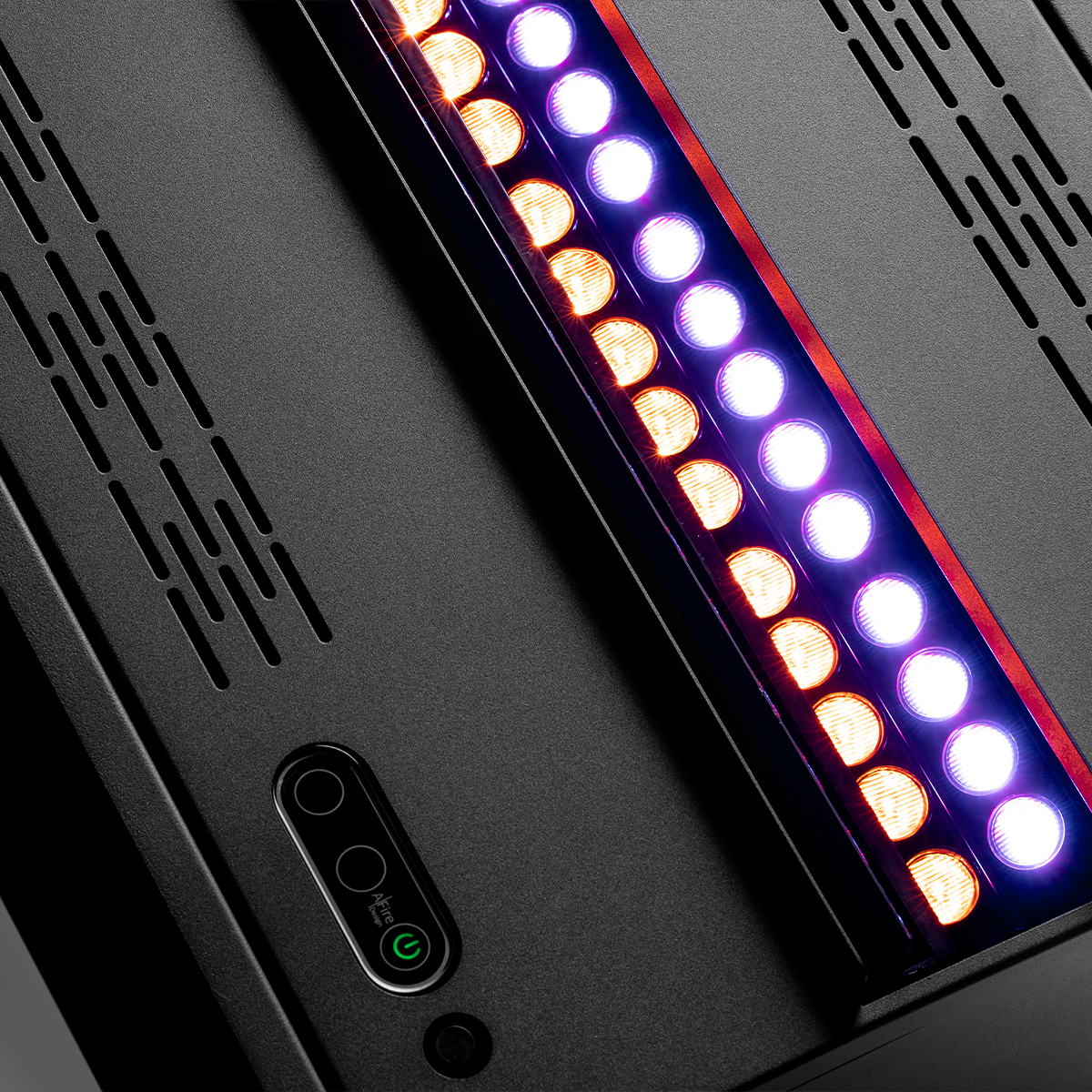
There's no combustion. No real flame. Aquafire's fireplaces produce their effect through ultrasonic water vapor technology: a mist is generated, lit from below by LED, and rises to replicate the visual of a wood or gas fire with striking accuracy. The result is flame that looks luminous and alive, but produces no heat, no emissions, and no carbon monoxide.
What that means practically:
- No venting required. No flue, no chimney chase, no exterior wall penetration. The fireplace can go anywhere.
- No gas line. The only connection needed is a standard electrical outlet and a water source for the reservoir (or you can manually fill it).
- No special clearance requirements. Unlike wood-burning fireplaces, there are no mandated clearances related to combustible materials. The surround can be wood, fabric, even paper — whatever your design calls for.
- Safe for all rooms. Bedrooms, nurseries, sunrooms, enclosed patios...rooms that have historically been off-limits for fireplaces are now fully in play.
The flame can be adjusted in intensity and color temperature, which means the same fireplace can read as a moody evening accent or a bright, high-contrast focal point depending on the moment.

Styling the Wall Around the Flame
The fireplace is the composition's center of gravity — everything else on the wall is in conversation with it.
Symmetry vs. asymmetry. Flanking the fireplace with matching built-ins or niches creates a formal, composed feeling. Letting the wall breathe on one side while adding a single tall object on the other (a vase, a sculptural floor lamp, a piece of art) creates a more editorial, less expected look.
Height above the flame. This is often where the design lives. A single piece of art, a raw-edge shelf with minimal objects, or simply the wall itself extending clean and uninterrupted above the fireplace all make different statements. Resist the impulse to overcrowd. A little negative space above the flame is part of the composition.
Lighting layers. Recessed lighting aimed at the wall creates a wash effect that enhances texture in plaster or stone. Sconces flanking the fireplace add warmth at eye level. The flame itself functions as a light source — factor it in when planning the overall lighting scheme (and learn about light traps while you're at it).

The Room You Were Always Trying to Make
A water vapor fireplace wall doesn't add warmth to a room in the thermal sense — at least, not primarily. What it adds is presence. The sense that the room has a center. That someone made a decision about what this space should feel like, and then built toward it.
Water vapor technology has removed most of the friction that historically made that kind of statement inaccessible. The flue isn't a constraint anymore. Neither is the gas line, the clearance requirement, or the room's intended purpose.
All that's left is the design question: the material, the proportion, the light.
That part was always the interesting part anyway.
Ready to spec your statement wall? Explore Aquafire's full line of water vapor fireplaces — and find an authorized dealer near you.

Leave a comment
This site is protected by hCaptcha and the hCaptcha Privacy Policy and Terms of Service apply.