


Safety & Sustainability
Beauty Without the Carbon Footprint: How Aquafire Redefines Eco-Friendly Ambiance
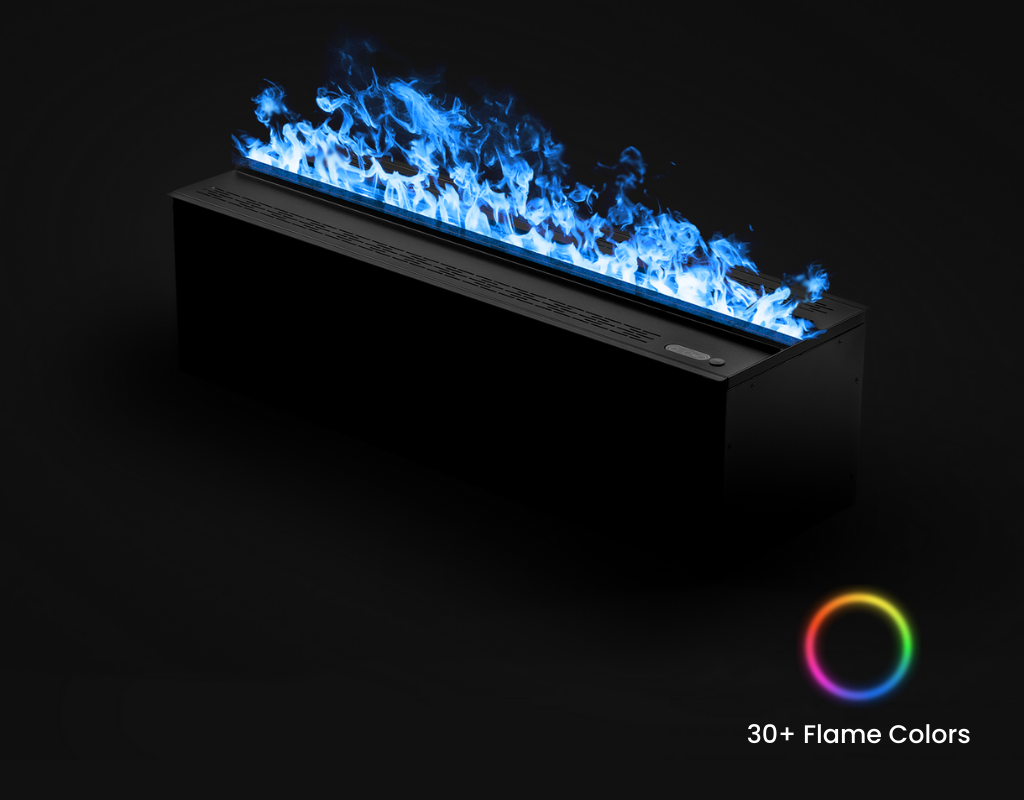
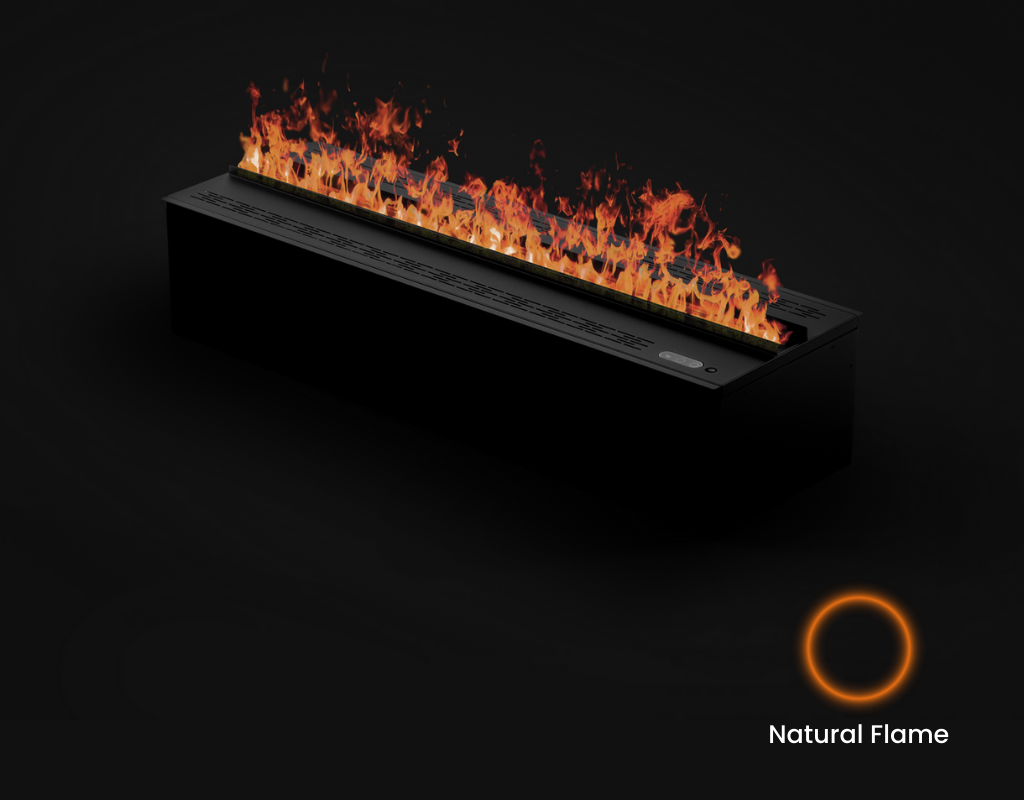
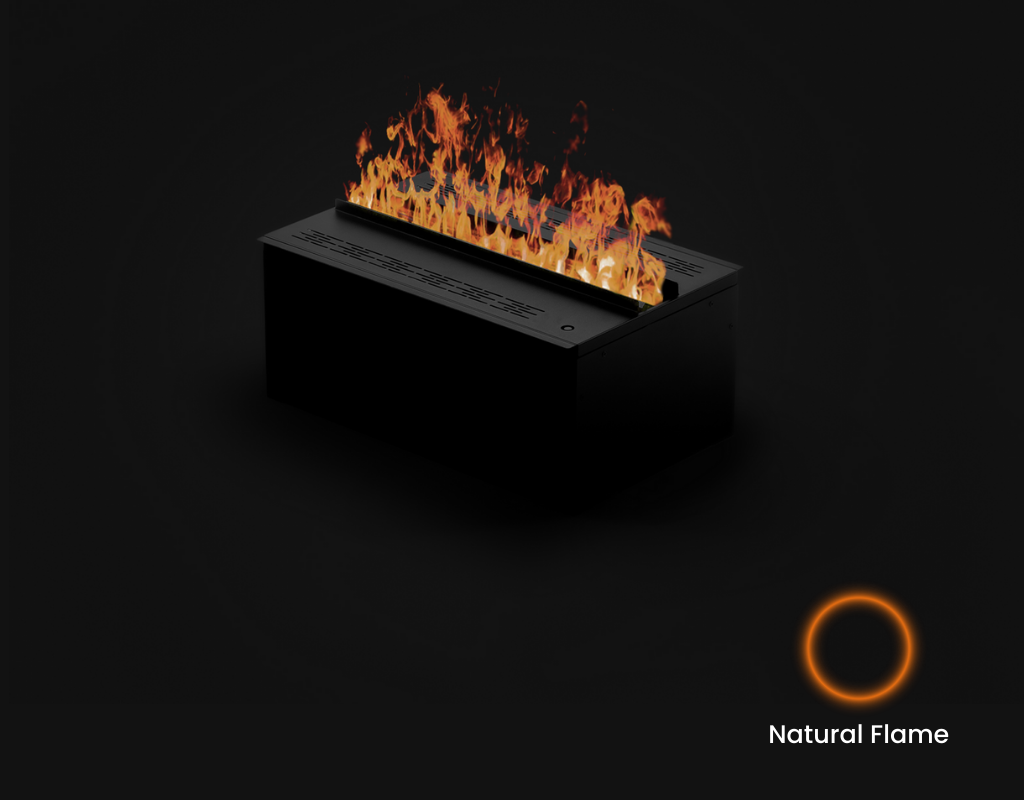
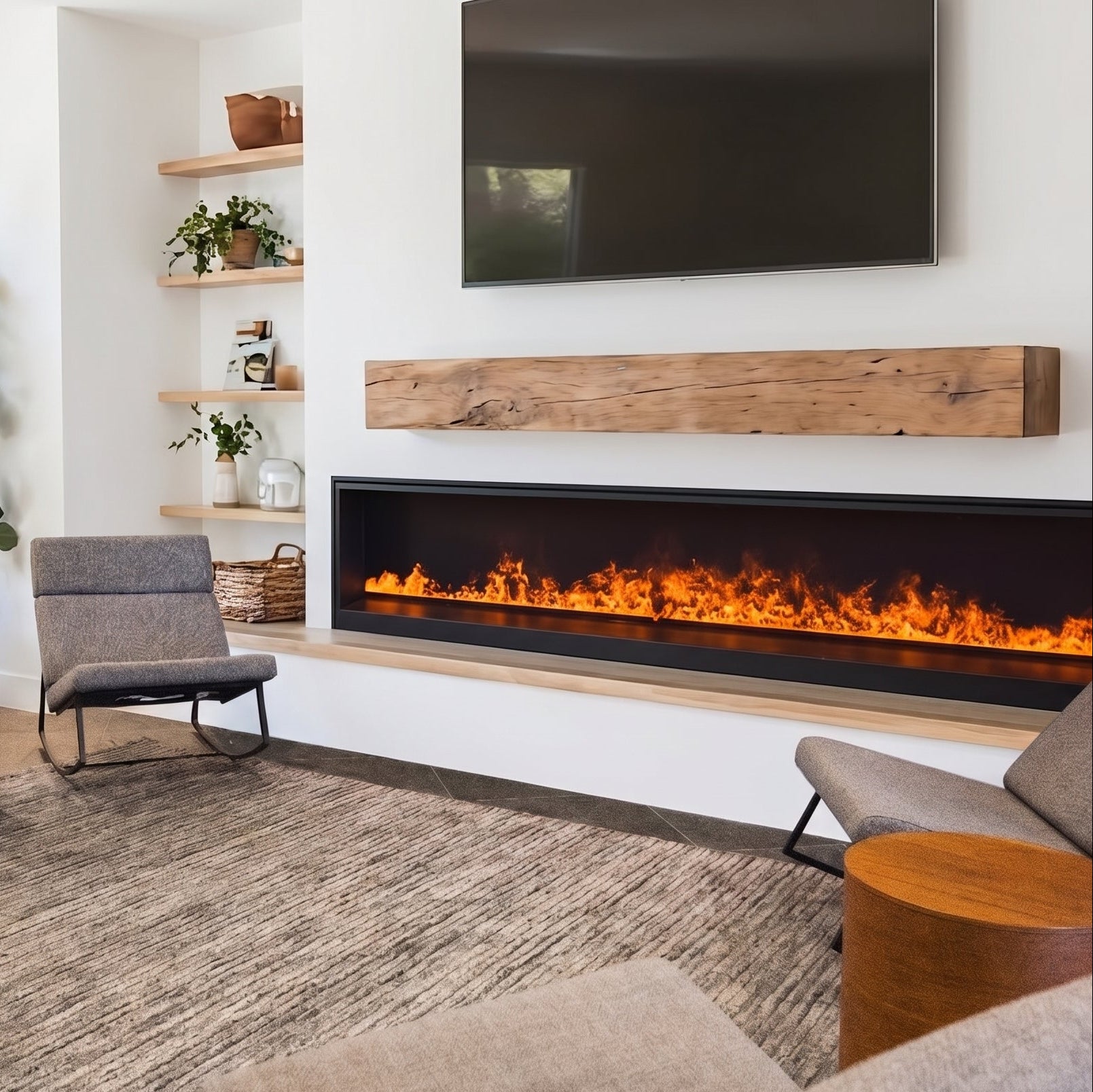
Traditional fireplaces have long been synonymous with warmth and ambiance, but they come at a significant environmental cost. Aquafire's revolutionary water vapor technology eliminates harmful emissions while delivering the captivating visual appeal of dancing flames—proving that you don't have to choose between beauty and environmental responsibility.
Our patented ultrasonic and LED technology creates realistic flame effects using only tap water and minimal electricity, offering architects, designers, and eco-conscious homeowners a truly sustainable alternative for creating stunning focal points in any space.

Environmental Benefits: Measurable Impact
Zero Emissions
- No carbon dioxide (CO₂): Unlike wood-burning fireplaces that emit 2-4 tons of CO₂ annually, or gas fireplaces releasing 1-2 tons per year, Aquafire produces zero direct emissions
- No particulate matter (PM2.5): Wood smoke releases harmful fine particles linked to respiratory issues—Aquafire emits none
- No volatile organic compounds (VOCs): Gas combustion releases formaldehyde, benzene, and other VOCs that degrade indoor air quality
- Safe for indoor air quality: No impact on HVAC systems, air filtration requirements, or ventilation needs
- No combustion byproducts: Eliminates carbon monoxide, nitrogen oxides, and other toxic gases associated with traditional fireplaces
Low Energy Consumption
- LED flame technology: Consumes approximately 40-150 watts depending on unit size (comparable to a standard light bulb)
- Ultrasonic mist generation: Uses 20-50 watts for water vaporization
- Total energy use: 60-200 watts for standard residential units—up to 95% less energy than electric resistance heaters (1,500+ watts)
- Annual energy cost: Estimated $15-$45 per year based on 4 hours daily use at average US electricity rates ($0.16/kWh)
- Comparison: Gas fireplaces cost $200-$600 annually in fuel; wood-burning fireplaces $300-$900 in wood and maintenance
Water Conservation
- Tap water powered: Uses standard municipal water—no special treatment required (water softener recommended for longevity)
- Water consumption: Approximately 0.5-1.5 liters per hour of operation depending on unit size
- Efficient closed-loop system: Automatic refill technology minimizes waste
- Graywater compatible: Can integrate with sustainable building water reclamation systems
- Minimal environmental impact: Water evaporates naturally into indoor air, contributing to humidity levels without waste
No Hazardous Materials
- No combustible fuel storage: Eliminates risks and environmental concerns associated with propane tanks, natural gas lines, or wood storage
- No toxic cleaning chemicals: Unlike chimneys requiring caustic creosote removers and harsh cleaning agents
- No ash or soot disposal: Zero waste byproducts from operation
- Recyclable components: LED strips, ultrasonic mist makers, and metal housing components are recyclable at end of life
- RoHS compliant electronics: Lead-free and environmentally responsible component sourcing
Sustainable Design & Manufacturing
Built for Longevity
- Durable construction: 2+ year warranty with 10+ year expected lifespan with proper maintenance
- Serviceable components: Mist makers, LED light strips, and water pumps are user-replaceable, extending product life and reducing waste
- Modular design: Repair instead of replace—individual components can be serviced without discarding entire unit
Responsible Manufacturing
- Based in Asheville, North Carolina: Supporting local economy and reducing international shipping impacts
- Reduced shipping footprint: No heavy masonry, no fuel canisters—lighter weight means lower transportation emissions
- Minimal packaging waste: Efficient packaging design using recyclable materials
LEED & Green Building Contributions
Aquafire installations can contribute to multiple LEED v4.1 credit categories, making them an ideal specification for projects pursuing green building certification:
Eligible LEED Credits
- Indoor Environmental Quality (IEQ): Zero combustion emissions support enhanced indoor air quality strategies and low-emitting materials requirements
- Energy & Atmosphere (EA): Minimal energy consumption (60-200W) contributes to overall building energy performance optimization
- Materials & Resources (MR): Recyclable components and serviceable design support building life-cycle impact reduction
- Innovation (IN): Water vapor technology represents innovative approach to amenity design with environmental benefits
Building Design Advantages
- No venting required: Eliminates building envelope penetrations, reducing thermal bridging and air leakage
- Flexible placement: Install anywhere with electrical and water access—reduces material waste in retrofits and renovations
- No combustion air requirements: Doesn't compromise building pressurization or mechanical ventilation strategies
- Supports tight building envelopes: Compatible with Passive House and net-zero energy building standards
Lifecycle Environmental Comparison
| Impact Category | Aquafire | Wood-Burning | Gas Fireplace | Electric Heater |
|---|---|---|---|---|
| Annual CO₂ Emissions | ~0.1 tons (electricity only) | 2-4 tons | 1-2 tons | 1-3 tons (electricity) |
| Energy Consumption | 60-200 watts | N/A (wood fuel) | 20,000-40,000 BTU/hr | 1,500+ watts |
| Indoor Air Quality | No impact (zero emissions) | Severe (PM2.5, VOCs, CO) | Moderate (VOCs, CO risk) | No impact |
| Maintenance Chemicals | None (water only) | Chimney cleaners, creosote removers | Minimal | None |
| Installation Materials | Minimal (electrical, water line) | Extensive (chimney, hearth, masonry) | Moderate (venting, gas lines) | Minimal (electrical only) |
| Venting Required | No | Yes (chimney) | Yes (direct vent or B-vent) | No |
| Annual Operating Cost | $15-$45 | $300-$900 | $200-$600 | $150-$400 |
Commercial & Hospitality Applications
Meeting Stringent Standards
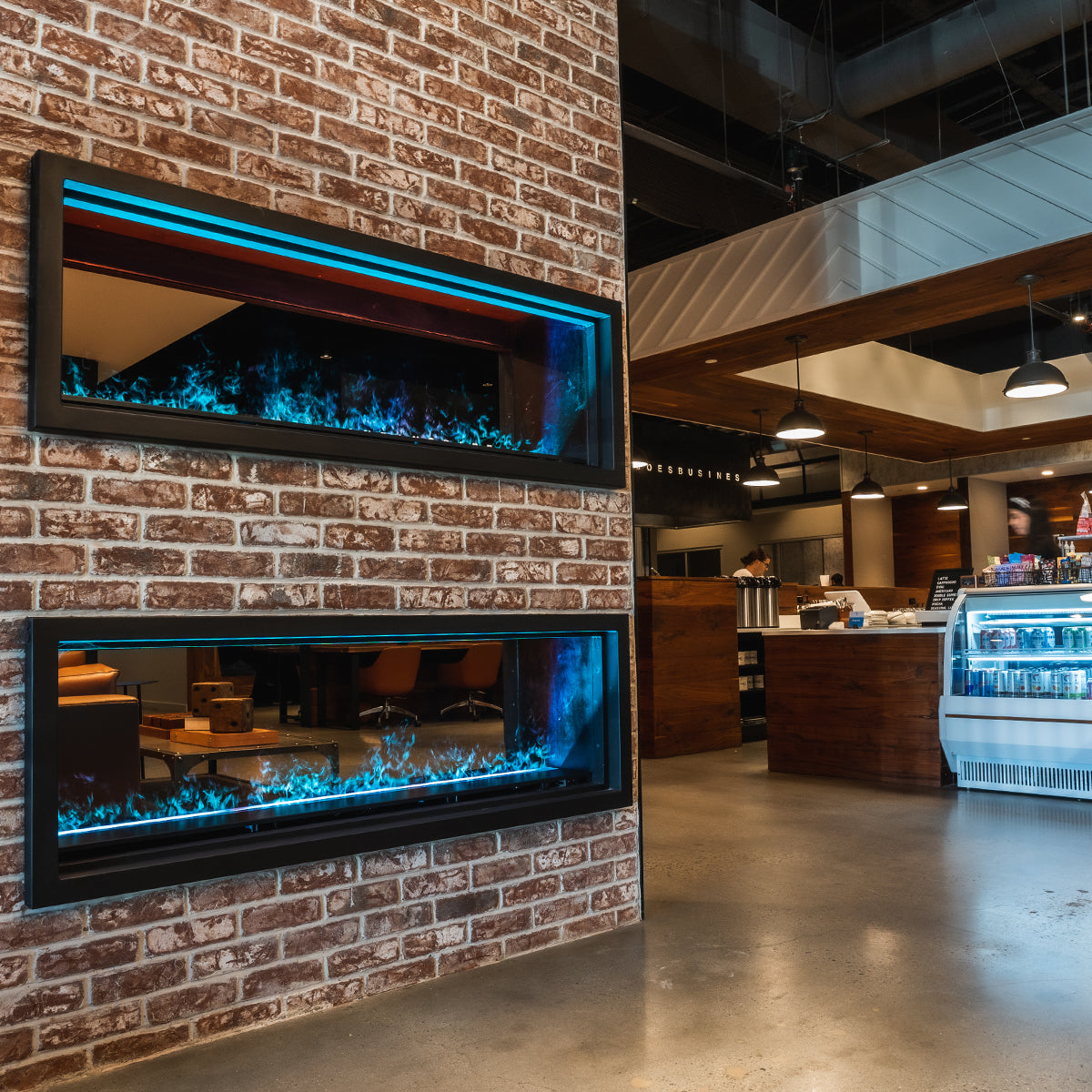
- Public space air quality compliance: Meets or exceeds indoor air quality standards for commercial buildings, hotels, and restaurants
- Reduced fire marshal restrictions: No open flame means fewer permitting hurdles in many jurisdictions
- Sustainability certifications: Supports LEED, WELL Building Standard, Green Globes, and hospitality-specific certifications (Green Key, EarthCheck)
- Corporate ESG goals: Helps commercial clients meet environmental, social, and governance commitments
Operational Benefits
- Lower insurance premiums: No combustion reduces fire risk and associated insurance costs
- Reduced maintenance downtime: No chimney sweeping, gas line inspections, or combustion system servicing
- Flexible design freedom: Install in locations impossible for traditional fireplaces (upper floors, interior spaces, outdoor covered areas)
Certifications & Compliance
- UL/CSA electrical safety certifications: Third-party verified electrical safety standards
- RoHS compliance: Restriction of Hazardous Substances directive—lead-free electronics
- Low voltage operation: Safe 12V-24V LED systems reduce electrical hazards
- California Title 24 compatible: Meets California's stringent energy efficiency standards
- ADA accessible: Can be specified for accessible design applications with appropriate controls
Our Commitment to Sustainability
Ongoing Innovation
- Water quality partnerships: Development of Vapor Pure water treatment solutions to extend component life and reduce maintenance
- Energy efficiency R&D: Continuous improvement of LED and ultrasonic technology for even lower power consumption
- Extended warranty programs: Encouraging product longevity through comprehensive coverage and support
- Component recycling initiatives: Developing take-back programs for end-of-life components
Transparency & Accountability
- Third-party energy testing: Independent laboratory verification of energy consumption claims
- Environmental product declarations (EPD): Working toward comprehensive lifecycle impact documentation
- Customer education: Providing detailed sustainability data to support informed purchasing decisions
Resources for Architects & Specifiers
We provide comprehensive technical documentation to support your green building projects:
- Sustainability Data Sheets: Detailed environmental impact specifications for CSI MasterFormat documentation
- LEED Credit Contribution Guide: Specific guidance on how Aquafire supports LEED v4.1 credit achievement
- Energy Consumption Calculator: Project-specific energy use and cost modeling tools
- CAD/BIM Files: Revit families and AutoCAD blocks for seamless integration into building models
- Specification Language: Ready-to-use spec text for Section 10 28 00 (Fireplaces and Stoves) or custom sections
Contact our specification team at info@aquafire.com to request technical documentation for your next project.
The Future of Sustainable Ambiance
As building codes tighten, air quality standards rise, and climate commitments intensify, the era of combustion-based fireplaces is drawing to a close. Aquafire represents the next generation of architectural ambiance—delivering the emotional warmth and visual drama of fire without compromise to our environment, our health, or our future.
Whether you're designing a LEED Platinum office tower, a net-zero energy home, or a boutique hotel pursuing sustainability certifications, Aquafire offers a proven, beautiful, and genuinely eco-friendly solution.
Beauty without the carbon footprint. Ambiance without the emissions. That's the Aquafire difference.
Contact Us
Do you have any question?
Got questions about Aquafire or need help placing an order? Reach out and one of our Customer Experience team members would love to assist you!
Our customer support is available Monday to Friday: 9am-4:30pm EST.
Average answer time: 24h