



The Complete Water Vapor Fireplace Buying Guide for 2026
Everything you need to know before investing in a water vapor fireplace — from how the technology works to which model fits your home, your lifestyle, and your budget.
There's a reason water vapor fireplaces are the fastest-growing segment in the hearth industry right now. Homeowners who want the warmth of a flickering flame without the headaches of gas lines, chimney maintenance, or combustion safety risks are discovering a technology that seemed impossible just a few years ago: realistic 3D flames created entirely from water mist and LED light.
But with more brands entering the market and prices ranging from under $2,000 to well over $8,000, choosing the right water vapor fireplace can feel overwhelming. This guide walks you through everything — how the technology actually works, what separates a premium unit from a budget one, what installation really looks like, and how to pick the model that matches your space, your aesthetic, and your budget.
Whether you're renovating a living room, finishing a basement, or designing a new build, this is the only buying guide you'll need in 2026.
What Is a Water Vapor Fireplace (and How Does It Actually Work)?
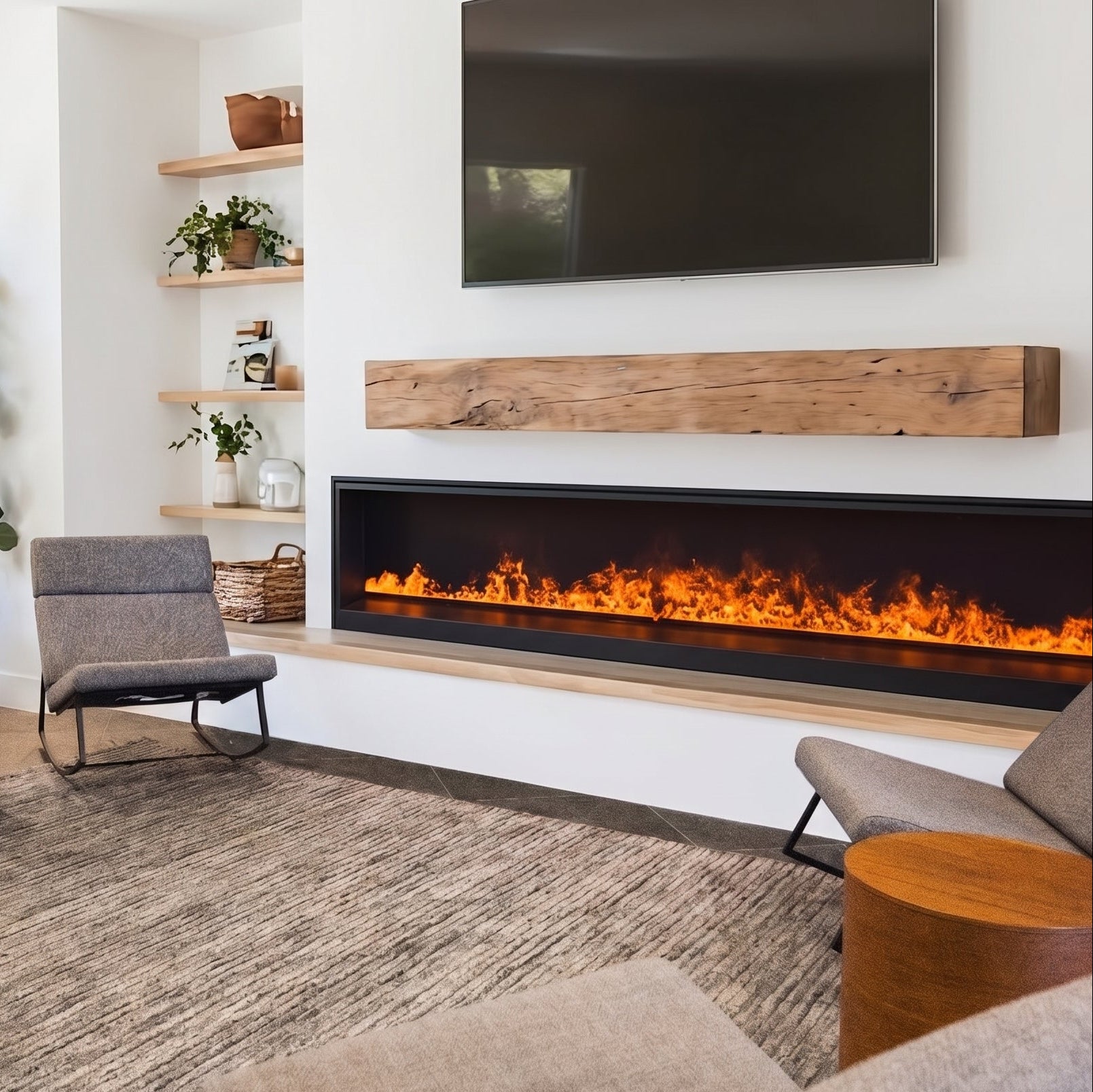
A water vapor fireplace — sometimes called a steam fireplace, mist fireplace, or ultrasonic fireplace — uses ultrasonic technology to turn ordinary tap water into an ultra-fine mist. LED lights project through this mist to create a three-dimensional flame effect that rises, flickers, and dances just like a real wood fire.
The science is straightforward. A small ultrasonic transducer (called a mist maker) vibrates at a frequency high enough to break water molecules into microscopic droplets. These droplets are so fine they behave like vapor, rising naturally in a column. Carefully positioned LEDs illuminate the mist from below and within, creating depth, movement, and color variation that flat-screen "flame" effects simply cannot replicate.
The result is a flame you can actually pass your hand through — it feels like a cool, gentle mist — with no heat, no emissions, no combustion byproducts, and no risk of burns.
This distinction matters more than most buyers realize. Traditional electric fireplaces project a two-dimensional image onto a back panel or use spinning mirrors to simulate flame movement. They look like what they are: a screen playing a fire video. Water vapor fireplaces produce a genuine three-dimensional effect because the flame is a physical phenomenon — light refracting through suspended water particles in real space.
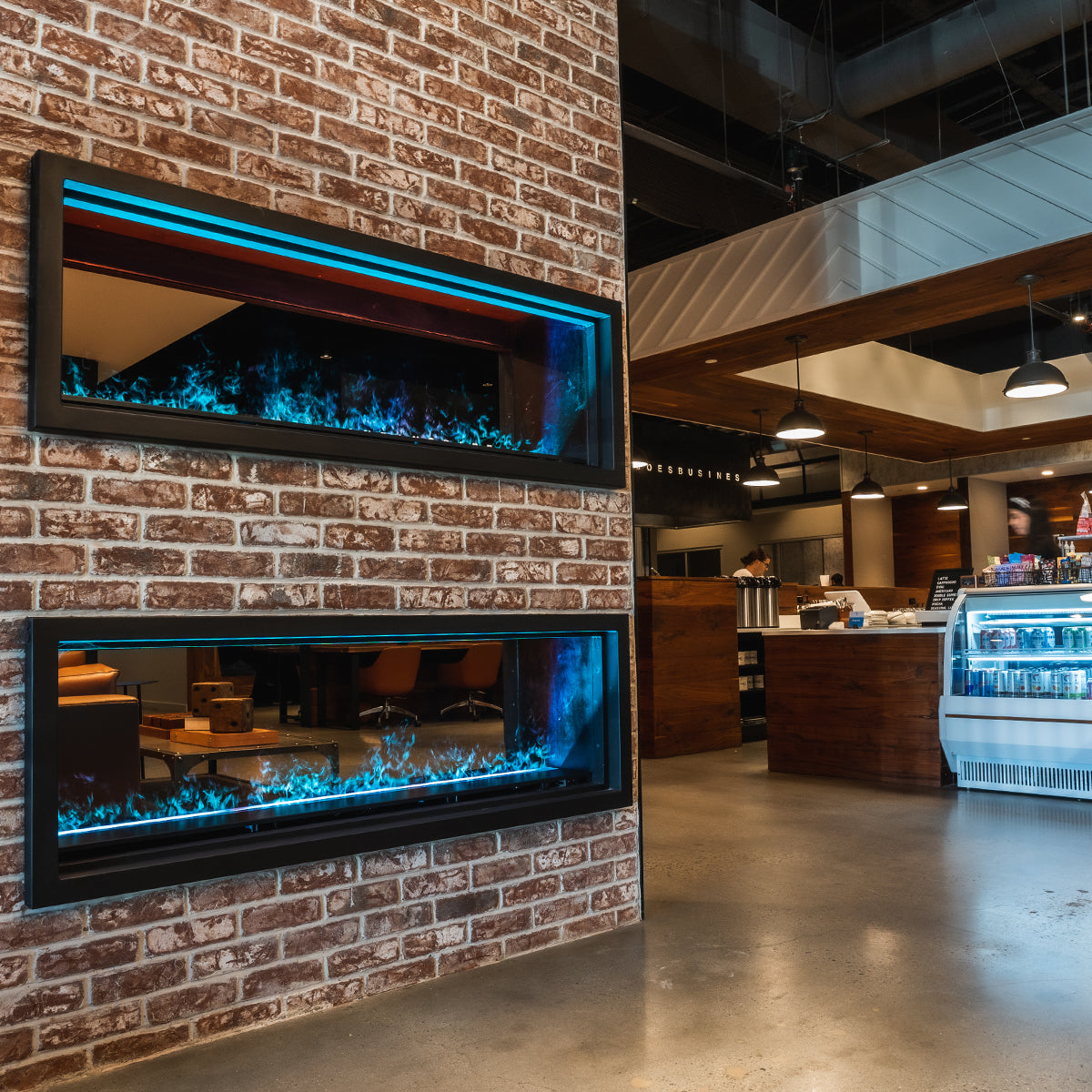
 Shown: Aquafire 60"
Water Vapor vs. Gas vs. Wood-Burning vs. Traditional Electric: An Honest Comparison
Before diving into specific models, it helps to understand where water vapor technology fits among your options.
Gas fireplaces remain the most common choice in new construction. They produce real heat (typically 20,000–40,000 BTUs), require a gas line and venting (either direct-vent or B-vent), and demand annual professional inspections. Installation costs run $3,000 to $8,000 including the gas line, and ongoing costs include gas consumption ($150–$400 per season depending on usage and local rates), annual servicing ($150–$300), and the eventual cost of replacing thermocouples, ignitors, and blower fans. Safety considerations include carbon monoxide risk if the unit malfunctions and burn risk from hot glass fronts — a real concern for homes with young children and pets.
Wood-burning fireplaces deliver the most authentic experience — real crackling, real wood scent, real radiant heat. They also deliver the most maintenance: annual chimney sweeping ($200–$400), creosote inspection, ash disposal, and a constant supply of seasoned firewood ($250–$500 per cord). Many municipalities have enacted burn bans or restricted wood-burning days due to air quality regulations. Insurance premiums may also increase with an active wood-burning fireplace.
Traditional electric fireplaces are the budget entry point, with units available from $200 to $2,000. Installation is simple — most plug into a standard outlet. But the flame effect is their Achilles' heel. Even the best traditional electric fireplaces use LED-and-mirror assemblies that produce a flat, repetitive pattern. At a distance, they're passable. Up close or from an angle, the illusion breaks.
Water vapor fireplaces occupy a distinct position. They produce no heat (which is a feature, not a limitation — more on this below), require no gas line, no chimney, no venting, and no combustion of any kind. Installation is primarily electrical (a standard 120V outlet for most models) plus a water source, which can be as simple as a refillable tank or as convenient as a direct plumb connection. The flame effect is genuinely three-dimensional, visible from every angle, and — in premium models — customizable across dozens of colors and intensities.
The trade-off is price. Quality water vapor units start around $2,000 for low-level models and reach $6,000–$12,500 for full-featured, commercial-grade units. But when you factor in the total cost of ownership — no gas bills, no annual servicing, no chimney sweeping, no insurance premium increases — a water vapor fireplace often costs less over a ten-year period than a gas unit.
Here's a simplified comparison:
| Factor | Gas | Wood-Burning | Traditional Electric | Water Vapor |
|---|---|---|---|---|
| Upfront cost (unit + install) | $3,000–$8,000 | $2,000–$15,000 | $200–$2,000 | $2000–$8,500 |
| Annual operating cost | $300–$700 | $400–$900 | $50–$150 | $30–$80 |
| Flame realism | High | Highest | Low–Medium | High |
| Heat output | Yes (20K–40K BTU) | Yes (variable) | Yes (low) | None |
| Venting required | Yes | Yes | No | No |
| Safe for kids & pets | Caution (hot glass) | No (open flame, sparks) | Generally yes | Yes (cool mist) |
| Maintenance | Moderate | High | Low | Low |
| Installation complexity | High (gas line, vent) | High (chimney, clearance) | Low (plug-in) | Low–Moderate |
Why "No Heat" Is Actually a Feature
One of the most common objections buyers raise is: "But it doesn't produce heat — what's the point?"
It's a fair question with a compelling answer.
If you live in a warm or moderate climate — and roughly 60% of the U.S. population does — you may want fireplace ambiance in your living room without turning your house into a sauna from October through April. Traditional fireplaces force a choice: run the unit and overheat the room, or leave it off and lose the ambiance.
Water vapor fireplaces decouple flame from heat entirely. You can run one year-round — in a Florida sunroom in August, a Phoenix living room in July, a San Diego bedroom any night of the year — without affecting your home's temperature or your HVAC system's workload.
For homeowners in cooler climates, the solution is equally simple: pair the water vapor fireplace with your existing HVAC system or a standalone space heater. You get precise temperature control from your thermostat and stunning visual ambiance from the fireplace, each optimized independently.
This separation also makes water vapor fireplaces the safest option on the market for families. No hot glass. No combustion gases. No burn risk. Nothing a curious toddler or a wandering cat can hurt themselves on. The mist is cool to the touch, and the unit can run unattended without any fire risk whatsoever.

What to Look For: The 7 Factors That Separate Premium From Mediocre
Not all water vapor fireplaces are created equal. Here's what to evaluate when comparing models.
1. Flame Realism and Depth
This is the entire point of the technology, so it deserves the most scrutiny. The best units use multiple ultrasonic mist makers arranged in a linear array to produce a wide, deep flame bed with natural variation across its width. Budget units may use a single mist maker, producing a narrow, columnar flame that looks more like a steam vent than a fire.
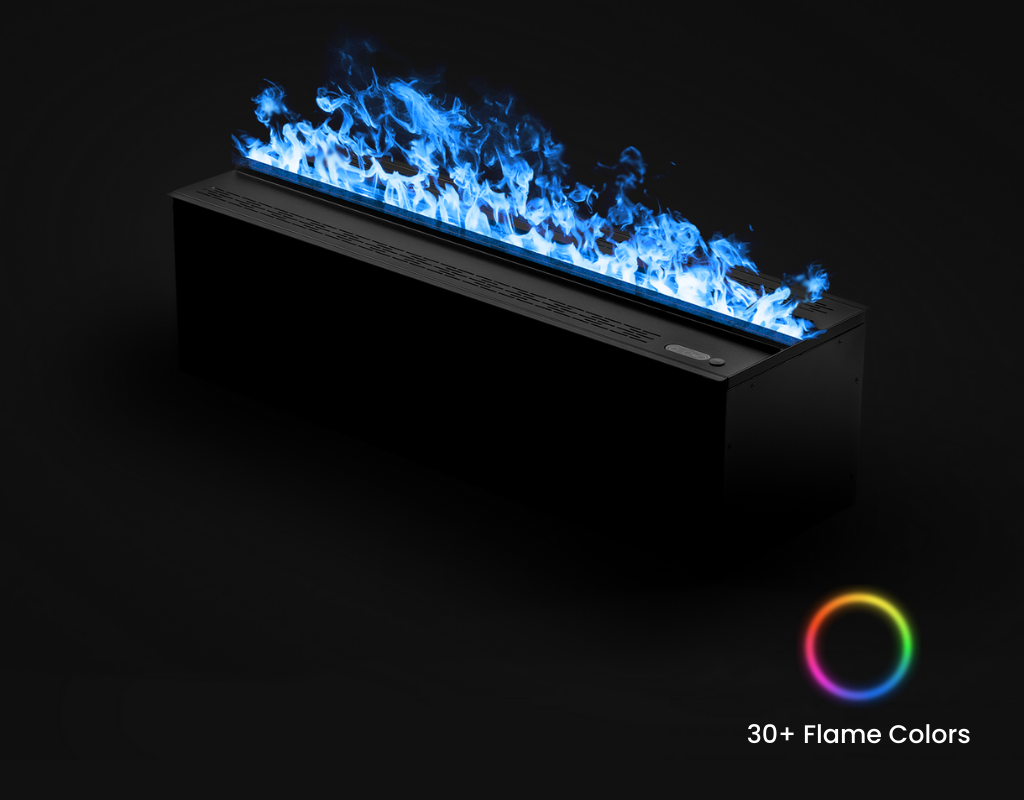
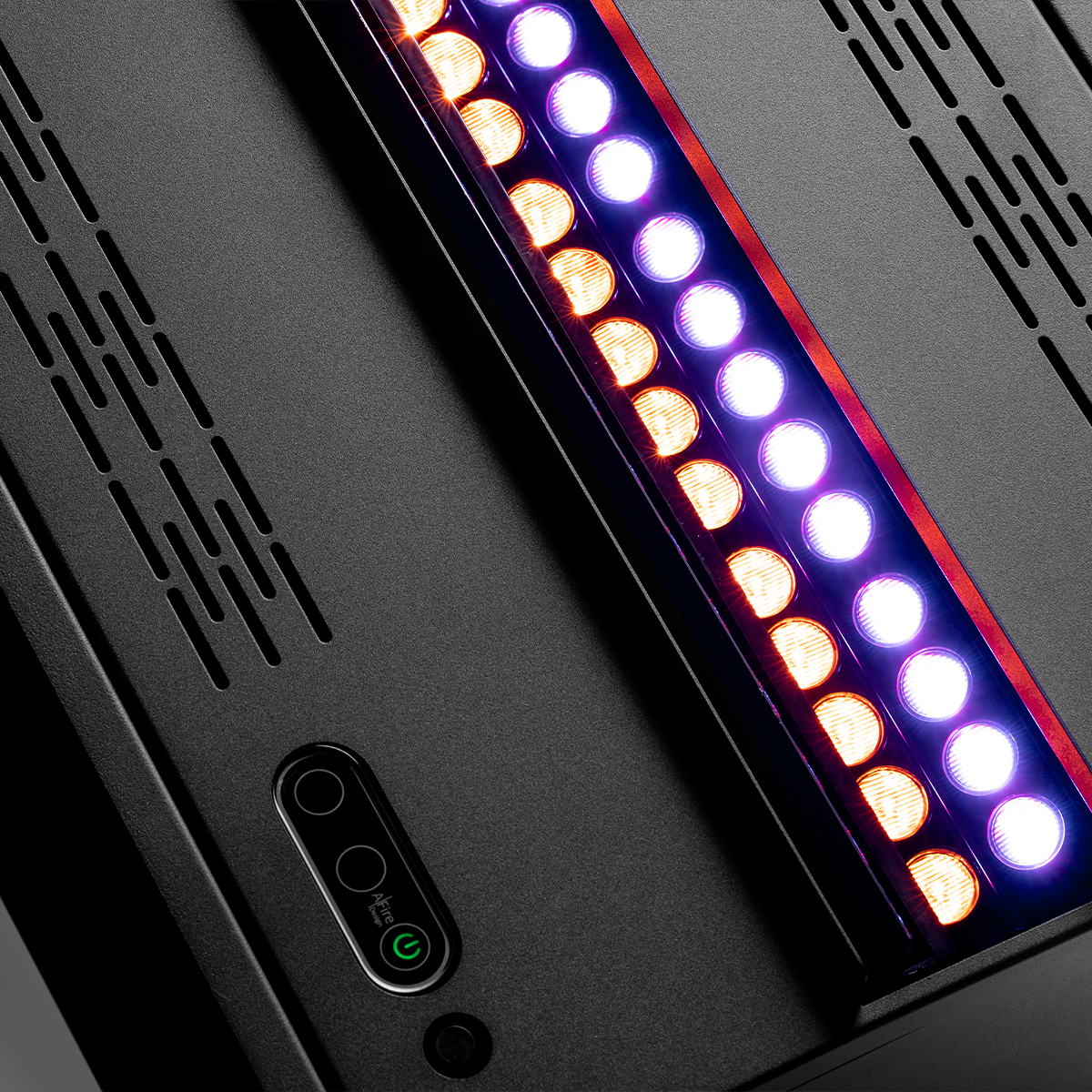
Look for units with independently controllable mist zones and multi-layer LED arrays. The Aquafire Pro, for example, uses a dual LED light bar system with individually addressable color zones, allowing the flame to shift between warm amber, deep orange, blue, violet, and over 30 other color combinations — all controllable from a smartphone app. This level of customization is rare in the category and allows you to match the flame to your room's mood, season, or décor.
2. Build Size and Available Widths
Water vapor fireplaces are typically sold as burners designed to be built into a wall, a mantel surround, or a custom enclosure. Available widths vary significantly between brands. Some manufacturers offer only one or two sizes (typically 40" and 60"), while others provide a broader range.
The Aquafire lineup, for instance, spans from 20" (the compact Lite model, ideal for bedrooms and offices) to 60" (the flagship Pro, designed for grand living rooms and commercial installations). The Pro is also available in 30", 40", and 50" widths, giving designers and homeowners flexibility to match their specific firebox dimensions.
When evaluating size, pay attention to both the visible flame width and the required cutout dimensions. A 40" unit with a 38" visible flame area is a better value than a 40" unit with only 32" of visible flame and 8" of frame.
3. Water Supply Method
This is a practical detail that significantly affects your daily experience.
Tank-fill models include an integrated water reservoir that you fill manually, typically every 8 to 18 hours of continuous use depending on tank size and mist output. This is simpler to install — no plumbing required — but means remembering to refill the tank regularly.
Direct-plumb models connect to your home's water supply via a small water line (similar to a refrigerator ice maker connection). The fireplace refills automatically, so you never think about water levels. This is the more convenient option for units that will run daily, but it does require a water line routed to the fireplace location during installation.
Most premium units offer both options. The Aquafire Pro and Original, for example, come with a built-in tank standard and offer an optional Direct Plumb Kit ($299–$598 depending on the model) for homeowners who want a set-it-and-forget-it experience. If you're planning a new build or major renovation, we'd strongly recommend running a water line during construction — it's inexpensive when walls are already open.
4. Smart Home Integration and Controls
In 2026, smart home compatibility is no longer a luxury — it's an expectation. Evaluate whether the unit offers app-based control (iOS and Android), voice assistant integration (Alexa, Google Home, Apple HomeKit), and scheduled operation.
App control is especially valuable for water vapor fireplaces because it lets you adjust flame color, intensity, and mist output from the couch. Walking across the room to push buttons on a control panel every time you want to change the mood defeats the purpose of ambient technology.
The Aquafire Pro and Original both feature a dedicated iOS and Android app with full control over flame color, brightness, mist intensity, and scheduling. Smart home integration with Alexa and Google Home is on the product roadmap, which will enable voice commands like "Alexa, set the fireplace to amber" or inclusion in whole-home automation scenes.
5. LED Quality and Longevity
The LED system is the heart of the visual experience. Higher-quality LEDs produce a wider color gamut, more natural color transitions, and longer operational life. Budget units may use single-color LEDs (orange only) with limited brightness control, producing a flat, monotone flame.
Premium units use RGB or RGBW LED arrays that blend colors in real time. This is what enables the difference between a static orange glow and a dynamic flame that shifts between amber at the base, orange in the middle, and yellow at the tips — mimicking the natural color gradient of a real wood fire.
LED lifespan varies, but quality units spec LEDs rated for 30,000–50,000 hours. At four hours of daily use, that's 20–34 years before replacement becomes necessary.
6. Mist Maker Replacement and Ongoing Costs
This is the detail most buying guides skip, and it's important for setting realistic expectations.
Ultrasonic mist makers are consumable components. They operate at very high frequencies and gradually wear down, typically requiring replacement every 2,000–3,000 hours of use. At four hours per day, that's roughly 18 to 24 months between replacements.
Replacement mist makers typically cost $50–$100 each. A compact 20" unit may use a single mist maker, while a 60" unit may use three or four. For a premium 60" unit, budget approximately $200–$300 per replacement cycle, or roughly $150–$200 per year.
For the Aquafire lineup specifically, replacement mist makers run $81 each. A 60" Pro uses three mist makers, so a full replacement cycle costs $243 — roughly $120–$160 per year depending on daily usage. This is still dramatically lower than the annual cost of gas ($300–$700), chimney sweeping ($200–$400), or gas unit servicing ($150–$300).
Additionally, water quality matters. Hard water can accelerate mist maker wear and leave mineral deposits. A water softener or inline filter (roughly $50–$265 depending on the system) is a worthwhile investment that extends mist maker life and maintains optimal flame clarity.
7. Warranty and Brand Reputation
For a product in the $1,000–$8,500 range, warranty coverage matters. Standard warranties in this category range from one to three years. Look for coverage that includes both the electrical components (LEDs, control boards, wiring) and the structural housing.
Also consider the brand's track record. Water vapor fireplace technology has been available for roughly a decade, but the market has expanded rapidly in the past three years. Some brands are rebadging generic Chinese-manufactured units with minimal quality control, while others are designing, engineering, and testing their own systems.
Aquafire's units are manufactured by A-Fire Design, a European manufacturer that has been producing water vapor fireplace technology for over a decade, with installations in major hospitality brands including Hilton, Ritz-Carlton, Marriott, Disney, and Chase Sapphire properties. That commercial pedigree — where reliability and safety standards are non-negotiable — provides an additional layer of confidence for residential buyers.
The Best Water Vapor Fireplaces in 2026: A Candid Look
Here's an honest assessment of the top options available this year.
Aquafire Pro — Best Overall for Customization and Realism
The Aquafire Pro is the most feature-dense water vapor fireplace on the market in 2026. Its dual LED light bar system with 30+ flame colors, dedicated smartphone app, and availability in five widths (20" to 60") make it the most versatile option for homeowners who want full control over their flame aesthetic.
The Pro's flame realism is its headline feature. Multiple independently controllable mist zones produce depth and variation across the full width of the flame bed, and the RGBW LED array creates natural color gradients that shift in real time. At its best, the Pro produces a flame effect that is genuinely difficult to distinguish from a real gas fire — visitors regularly ask if it's "really water."
Build quality is commercial-grade, which is unsurprising given Aquafire's hospitality portfolio. Dimensional diagrams are available for every size variant, and professional resources including BIM files and CAD drawings signal that the company takes installation precision seriously.
Price: $3,996 (20") to $8,490+ (60") Best for: Living rooms, great rooms, master bedrooms, and custom installations where flame realism and color customization are top priorities. Consider if: You want the most realistic, most customizable flame effect available and you're willing to invest in a premium product.
Aquafire Original — Best Value for Realistic Flame
The Original shares much of the Pro's DNA at a lower price point. It uses the same water vapor technology and offers strong flame realism, though with a somewhat simpler LED configuration. It's available in multiple widths and supports the same Direct Plumb Kit option for automatic water refilling.
For homeowners who want excellent flame realism without the Pro's expanded color palette and advanced app features, the Original delivers outstanding value.
Price: Starting at $1,699 Best for: Homeowners who prioritize flame realism over extensive color customization.
Aquafire Lite — Best Entry Point to Water Vapor
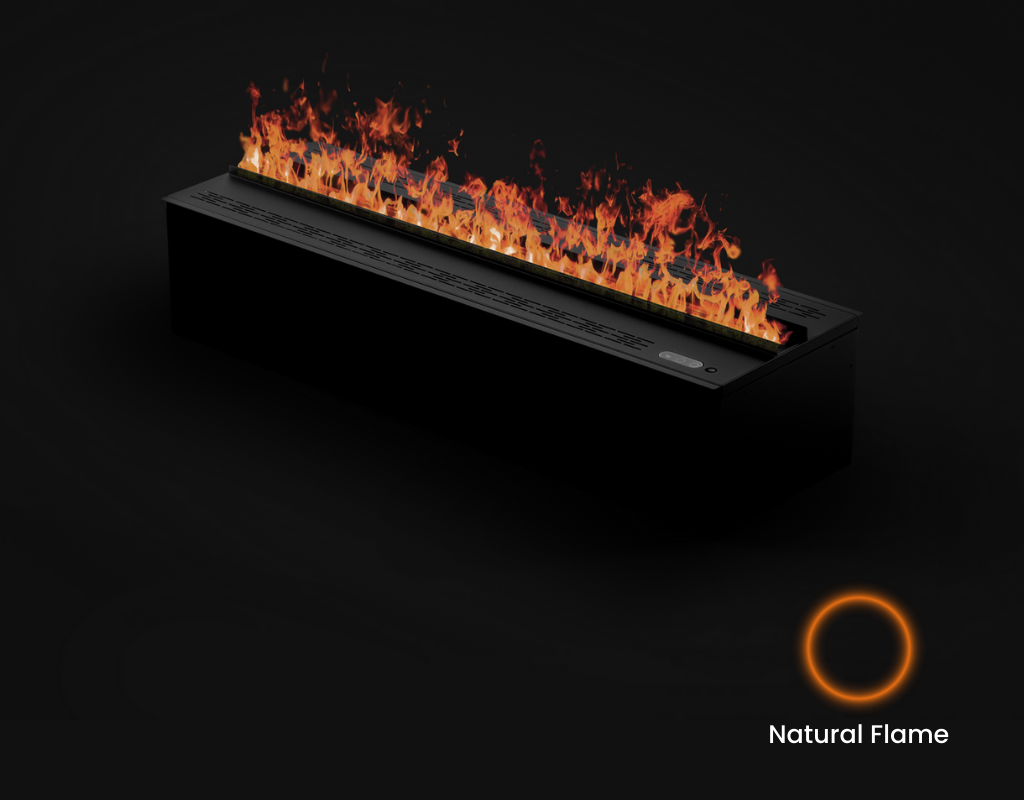
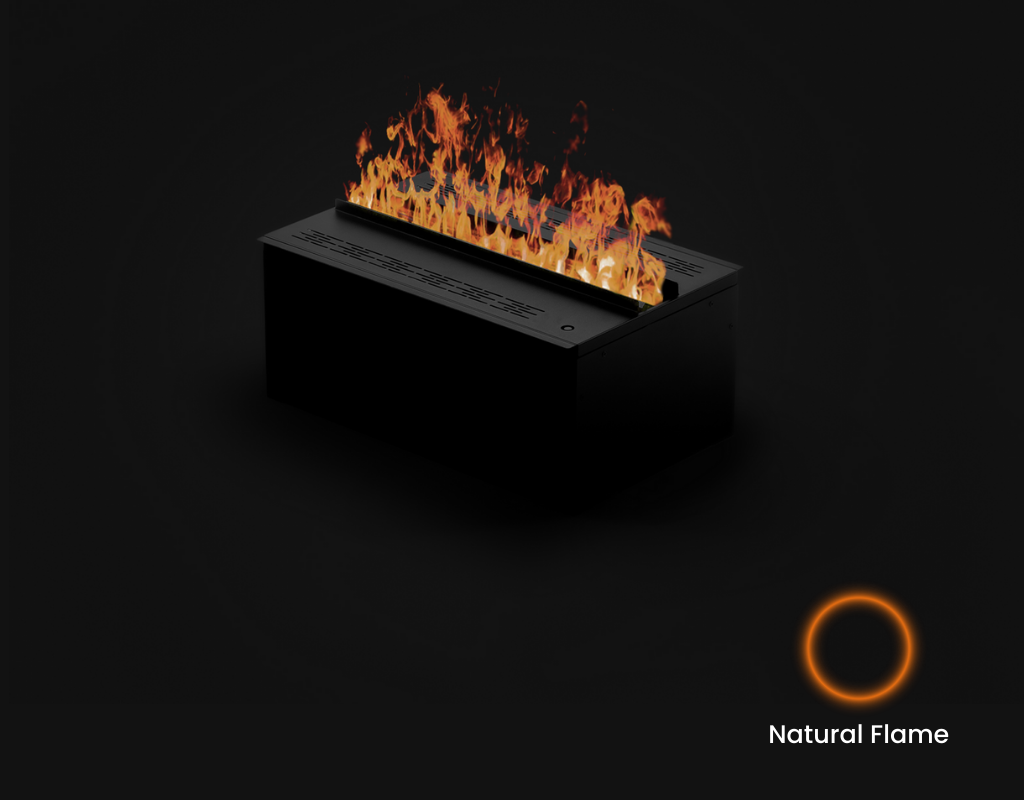
The Lite is designed to make water vapor technology accessible at a lower price. It produces a natural orange flame (no multi-color options) in a compact form factor suitable for bedrooms, home offices, and smaller living spaces.
If you're curious about water vapor technology but not ready to invest $3,000+, the Lite lets you experience the effect firsthand.
Price: Starting at $899 Best for: Bedrooms, offices, and budget-conscious buyers who want to experience water vapor flame technology.
Dimplex Opti-Myst — The Established Competitor
Dimplex is a well-known name in the electric fireplace industry, and their Opti-Myst line has been available for several years. Opti-Myst uses ultrasonic mist technology similar in principle to other water vapor units, housed in Dimplex's familiar cabinet-style and burner form factors.
Dimplex's strength is brand recognition and widespread retail availability. Their units are sold through major home improvement retailers and come with the backing of a large, established company. The flame effect is solid, though generally limited to traditional orange-amber tones without the broader color customization found in newer competitors.
Best for: Buyers who value the comfort of a well-known brand and prefer to purchase through brick-and-mortar retail channels.
MagikFlame — The Marketing-Forward Option
MagikFlame takes a different approach, combining a traditional mantel cabinet with a screen-based flame display enhanced by holoflame technology. Technically, MagikFlame is not a pure water vapor fireplace — it uses a combination of projected flames and mist effects. The result is visually impressive from the front, though the effect is more viewpoint-dependent than true 3D water vapor.
MagikFlame compensates with aggressive trust-building: UL certification badges, a dedicated reviews page, financing via Bread, and a brand story centered on being a Nashville family business.
Best for: Buyers who want an all-in-one mantel package with built-in heating capability and who prioritize ease of setup over burner-style customization.
Installation: What to Expect
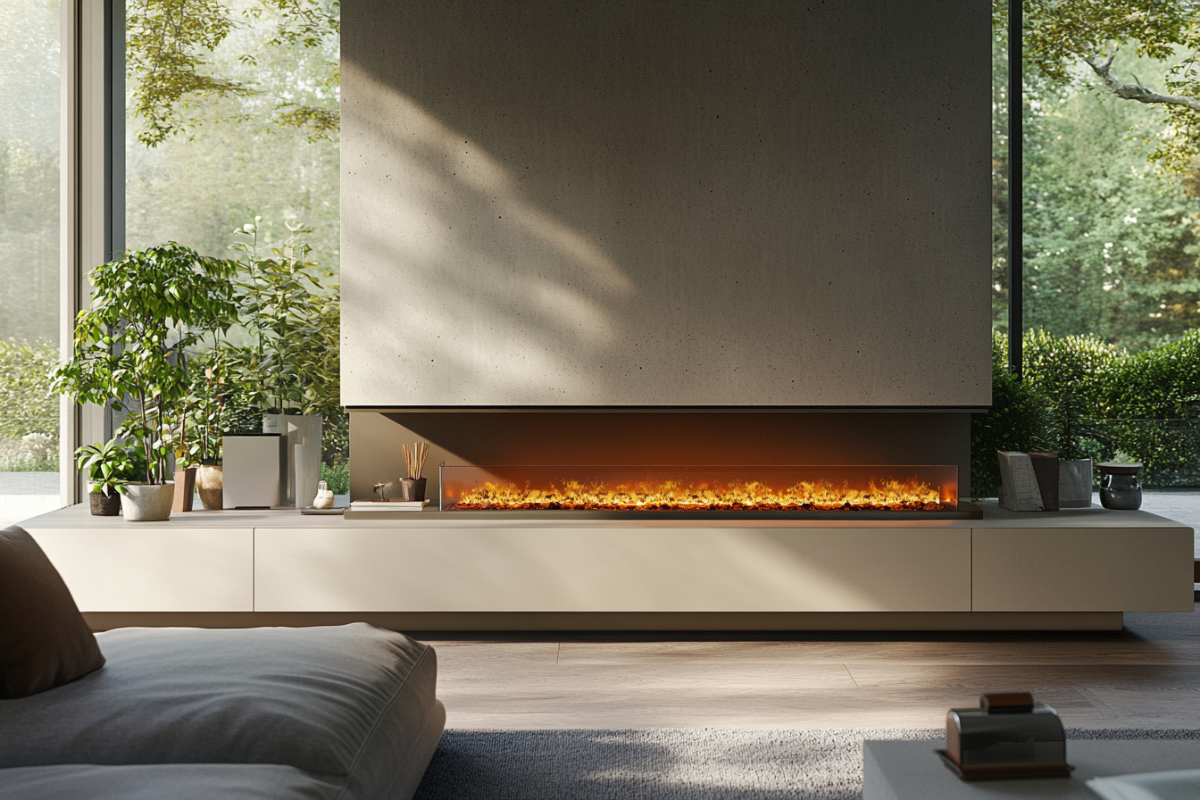
One of water vapor technology's biggest advantages is installation flexibility. Because there's no combustion, no venting, and no gas line, a water vapor fireplace can go almost anywhere in your home — including interior walls, apartments, condos, and rooms where a gas or wood-burning fireplace would be physically impossible.
For tank-fill units, installation requirements are minimal. You need a standard 120V electrical outlet behind or near the unit, a framed opening (firebox) built to the manufacturer's specified dimensions, and adequate access to refill the water tank. Most competent DIYers can handle the framing and finishing; the electrical should be done by a licensed electrician if an outlet isn't already in place.
For direct-plumb units, add a cold water supply line to the requirement list. This is identical in scope to running a water line for a refrigerator ice maker — a licensed plumber can typically complete it in an hour or two if the wall is already open.
Total installation cost, including framing, electrical, and finishing (but excluding the unit itself), typically runs $500–$2,500 depending on the complexity of the surround, whether new electrical or plumbing is needed, and local labor rates. This is roughly one-third to one-half the installation cost of a gas fireplace.
A few practical tips from homeowners who've been through the process:
First, build the firebox slightly deeper than spec'd — an extra inch or two of depth gives you room to work during installation and ensures adequate airflow around the unit.
Second, consider your water hardness. If you have hard water (above 7 grains per gallon), an inline water softener or filter is a wise investment. It extends mist maker life, prevents mineral buildup on internal components, and keeps the flame effect crystal-clear.
Third, plan your surround material with moisture in mind. Water vapor fireplaces release a small amount of humidity. Natural stone, tile, and painted drywall all handle this well. Untreated wood directly above the flame opening may need a moisture-resistant finish.
Total Cost of Ownership: A 10-Year View
Understanding the full financial picture helps you compare options fairly. Here's what a premium water vapor fireplace costs over a decade, compared to gas.
Water vapor fireplace (premium 40" unit):
- Unit cost: ~$5,000
- Installation: ~$1,500
- Electricity (4 hrs/day): ~$50/year × 10 = $500
- Water: negligible (~$10–$20/year)
- Mist maker replacement: ~$160/year × 10 = $1,600
- Water softener (one-time): ~$265
- 10-year total: ~$8,865
Gas fireplace (mid-range direct-vent):
- Unit cost: ~$3,500
- Installation (gas line + venting): ~$4,000
- Gas consumption (moderate use): ~$350/year × 10 = $3,500
- Annual servicing: ~$200/year × 10 = $2,000
- Replacement parts (thermocouple, ignitor, blower): ~$800 over 10 years
- 10-year total: ~$13,800
The premium water vapor unit costs roughly 35% less over a decade while eliminating combustion safety risk entirely. For homeowners in warm climates who don't need supplemental heat, the gap widens further since gas consumption drops to zero — you simply never run a gas fireplace in Miami.
Common Questions From First-Time Buyers
Does it increase humidity in my home? Minimally. A water vapor fireplace consumes roughly 1–2 liters of water per 10 hours of operation, which translates to negligible humidity impact in a normally ventilated room. It's less moisture than a typical humidifier on its lowest setting.
Can I use it in a bedroom? Absolutely. Because there's no combustion, no carbon monoxide risk, and no heat output, water vapor fireplaces are safe to operate in bedrooms with doors closed. Many owners report that the gentle visual flicker and soft ambient light make it an ideal sleep-environment addition.
How loud is it? Premium units are nearly silent — the ultrasonic mist maker produces a faint hum that's typically inaudible from more than a few feet away. Some owners describe it as quieter than a laptop fan. Budget units with less refined mist maker assemblies can produce a noticeable buzzing; this is one area where you get what you pay for.
Will it damage my wall or TV above it? The mist rises and dissipates within the firebox enclosure. Properly installed units with adequate firebox depth direct the mist upward within the contained space, where it evaporates before contacting surrounding materials. That said, mounting a television directly above without a proper mantel shelf isn't recommended — not because of damage risk, but because any ambient moisture should be given space to dissipate.
Can I use essential oils or fragrance? Most manufacturers advise against adding anything to the water supply, as oils can coat and damage the ultrasonic mist maker. If scent is important to your fireplace experience, Aquafire developed a separate scent diffuser placed inside the dry mist vent to naturally diffuse your favorite aroma.

Making Your Decision: A Simple Framework
If you're still weighing your options, here's a straightforward decision framework.
Choose a water vapor fireplace if you want realistic flame ambiance without combustion risk, you live in a warm or moderate climate where supplemental heat isn't needed, you have children or pets and safety is paramount, you want to install a fireplace in a location where gas or wood isn't feasible (interior wall, condo, apartment), or you value low maintenance and minimal ongoing cost.
Choose gas if supplemental heat is a primary requirement and your home already has gas infrastructure.
Choose the Aquafire Pro specifically if you want the most realistic and customizable flame effect available, you value smartphone control and extensive color options, you're investing in a space where the fireplace will be a focal point (living room, great room, master suite), and you want a product backed by commercial-grade engineering with a proven track record in high-end hospitality environments.
Choose the Aquafire Lite or Original if you want to experience water vapor technology at a more accessible price, or you prefer a simpler flame aesthetic without the need for 30+ color options.
Final Thoughts
The water vapor fireplace market in 2026 is more competitive than it's ever been, and that's good news for buyers. Prices are becoming more accessible, flame realism continues to improve, and smart home integration is becoming standard rather than aspirational.
The most important advice we can give: see one in person if at all possible. Water vapor flame technology is genuinely one of those products that photos and videos don't fully capture. The three-dimensional depth, the way light plays through the mist, the gentle movement — it's an experience that converts skeptics into buyers within seconds.
If you can't see one in person, look for video content shot from multiple angles. A quality water vapor fireplace looks just as real from the side as it does from the front. That's the test that separates the best in this category from everything else.
Ready to explore Aquafire's lineup? Visit aquafire.com to see the Pro, Original, Lite, and Gatsby in detail — with full specifications, dimensional drawings, and professional installation resources for every model.



Leave a comment
All comments are moderated before being published.
This site is protected by hCaptcha and the hCaptcha Privacy Policy and Terms of Service apply.